/ /

Sakyamuni Buddha in Tibetan Buddhism: Background, Legends, Meanings & Wearing Taboos | Gau Box Thangka Guide

| Zen Rhymeart

For anyone interested in Tibetan Buddhism or looking for a meaningful spiritual accessory, Sakyamuni Buddha is the core figure that cannot be ignored. As the founder of Buddhism and the most revered deity in Tibetan Buddhism, his teachings and imagery have been cherished and passed down for thousands of years—often preserved in sacred Gau Box Thangkas, the portable spiritual companions we offer at our store. Today, we’ll dive deep into the true story of Sakyamuni Buddha in Tibetan Buddhism, his most touching legends, the profound meanings behind his imagery, and the important taboos to follow when wearing his portrait in a Gau Box Thangka. Whether you’re a devout practitioner, a cultural enthusiast, or seeking a spiritual talisman, this guide will help you understand the essence of Sakyamuni Buddha in Tibetan culture and how to honor his wisdom through your Gau Box Thangka.


Who is Sakyamuni Buddha in Tibetan Buddhism? (Authentic Background)

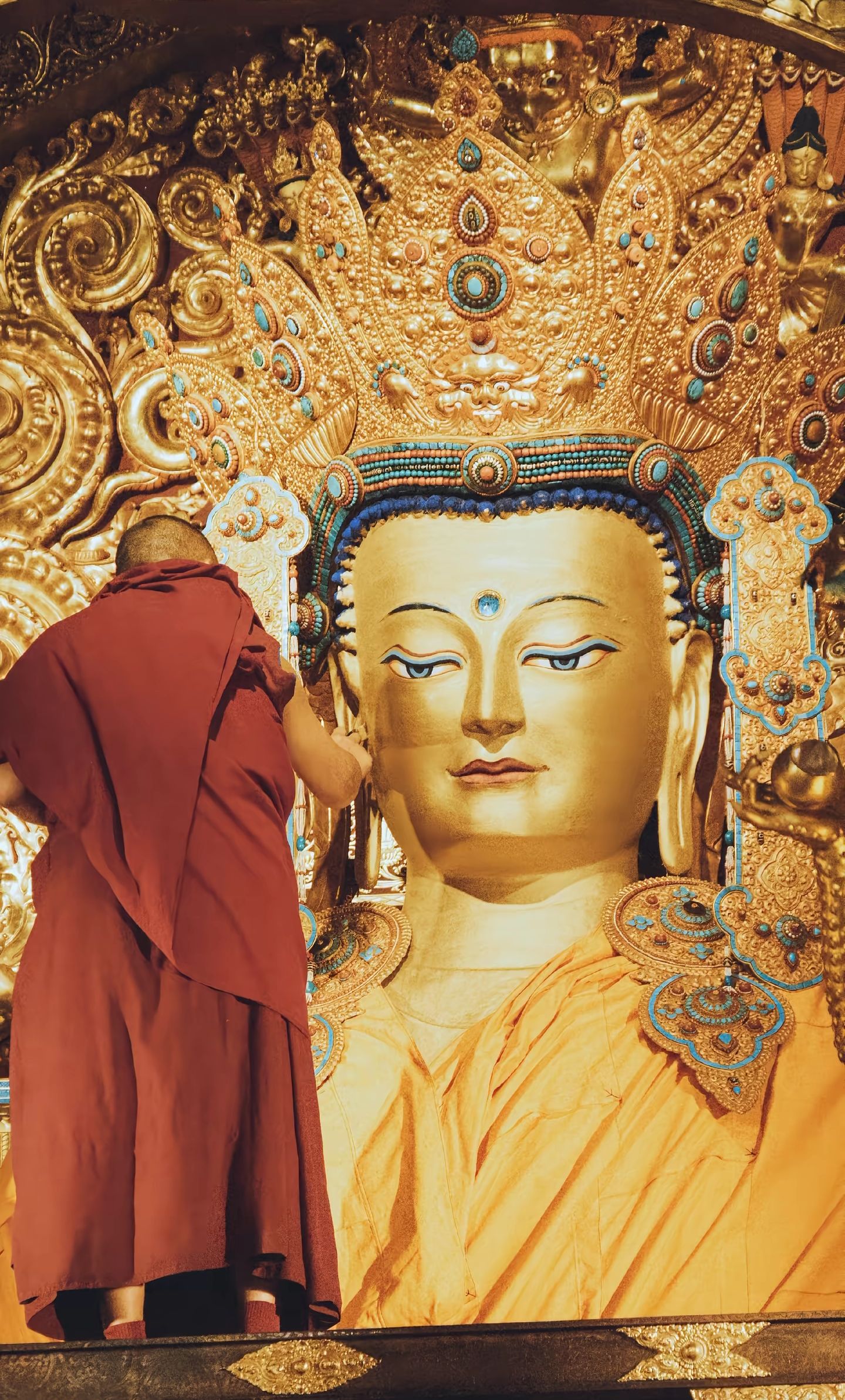
In Tibetan Buddhism, Sakyamuni Buddha—known as “Shakyamuni” in Tibetan, meaning “the Sage of the Shakya Clan”—is not just a mythical figure, but a historical sage who lived over 2,500 years ago, contemporaneous with Confucius, the great sage of China. His real name was Siddhartha Gautama, a prince of the ancient Kapilavastu Kingdom (now located in Nepal), son of King Suddhodana. Born into luxury, Siddhartha had everything a prince could desire: a noble title, a loving family, and a life of comfort. However, his heart was troubled by the universal sufferings he witnessed—birth, old age, illness, and death. Determined to find a path to liberation, he left his palace at the age of 29, abandoning his royal life to become an ascetic.
After years of rigorous practice and meditation, Siddhartha finally attained enlightenment at the age of 35 under a Bodhi tree in Bodh Gaya, India. From that moment, he became Sakyamuni Buddha—the “Enlightened One”—and spent the next 45 years traveling and teaching, sharing his wisdom about ending suffering and achieving inner peace. He passed away (entered nirvana) at the age of 80 in Kushinagar, India, leaving behind a legacy that would spread across Asia and beyond.
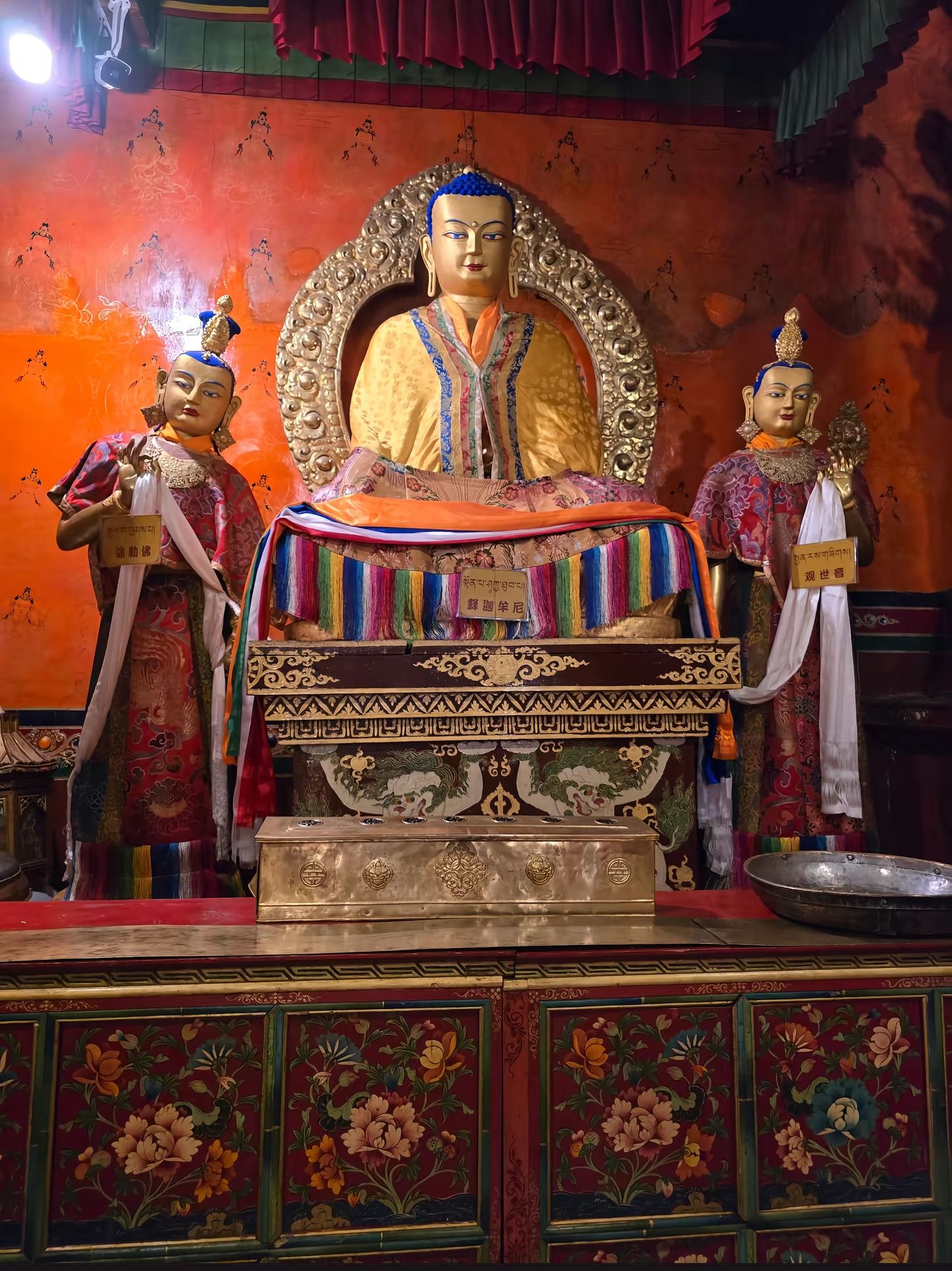
In Tibetan Buddhism, Sakyamuni Buddha is universally revered as the root teacher of all sentient beings, and his imagery is a centerpiece of every Tibetan monastery. Unlike Han Buddhism (Chinese Buddhism), which celebrates his birth on the 8th day of the 4th lunar month, enlightenment on the 8th day of the 12th lunar month, and nirvana on the same day as enlightenment, Tibetan Buddhism honors all three events on the 15th day of the 4th Tibetan month (known as Saga Dawa), a sacred day of merit-making where Tibetans gather to pray, circumambulate, and perform good deeds. Two of the most sacred Sakyamuni Buddha statues in Tibet are the 8-year-old statue brought by Princess Bhrikuti of Nepal (housed in小昭寺, Xiaozhao Temple) and the 12-year-old statue brought by Princess Wencheng of Tang China (housed in 大昭寺, Jokhang Temple)—both deeply cherished by Tibetan believers for centuries.

For our Gau Box Thangka collection, we honor this sacred legacy by featuring exquisite Sakyamuni Buddha imagery, painted with natural mineral pigments (a traditional Tibetan art form) and encased in handcrafted Gau Boxes—allowing you to carry the Buddha’s wisdom and blessings with you wherever you go, just as Tibetan believers have done for generations.


Timeless Legends of Sakyamuni Buddha in Tibetan Buddhism

The life of Sakyamuni Buddha is filled with profound legends that reveal his compassion, perseverance, and enlightenment—stories that have been passed down in Tibetan Buddhism for millennia and inspire spiritual seekers today. Here are three of the most beloved and meaningful tales:

1. The Birth of the Prince: “I Am the Lord of the World”

When Siddhartha was born, he did not cry like other infants. Instead, he stood upright, took seven steps in each of the four directions, and with each step, a lotus flower bloomed beneath his feet. Raising his right hand, he declared, “天上天下,唯我独尊” (“Above heaven and below earth, I alone am the honored one”). This declaration was not an act of arrogance, but a proclamation of his divine nature as the Enlightened One—here to guide all beings out of suffering. His mother, Queen Maya, passed away seven days later, and he was raised by his aunt, Mahaprajapati Gautami. This legend symbolizes the purity and sacredness of the Buddha’s mission, and in Tibetan art (including our Gau Box Thangkas), you will often see depictions of the Buddha’s birth with lotus flowers, representing purity and transcendence over suffering.

2. The Bodhi Tree Enlightenment: Conquering Temptation

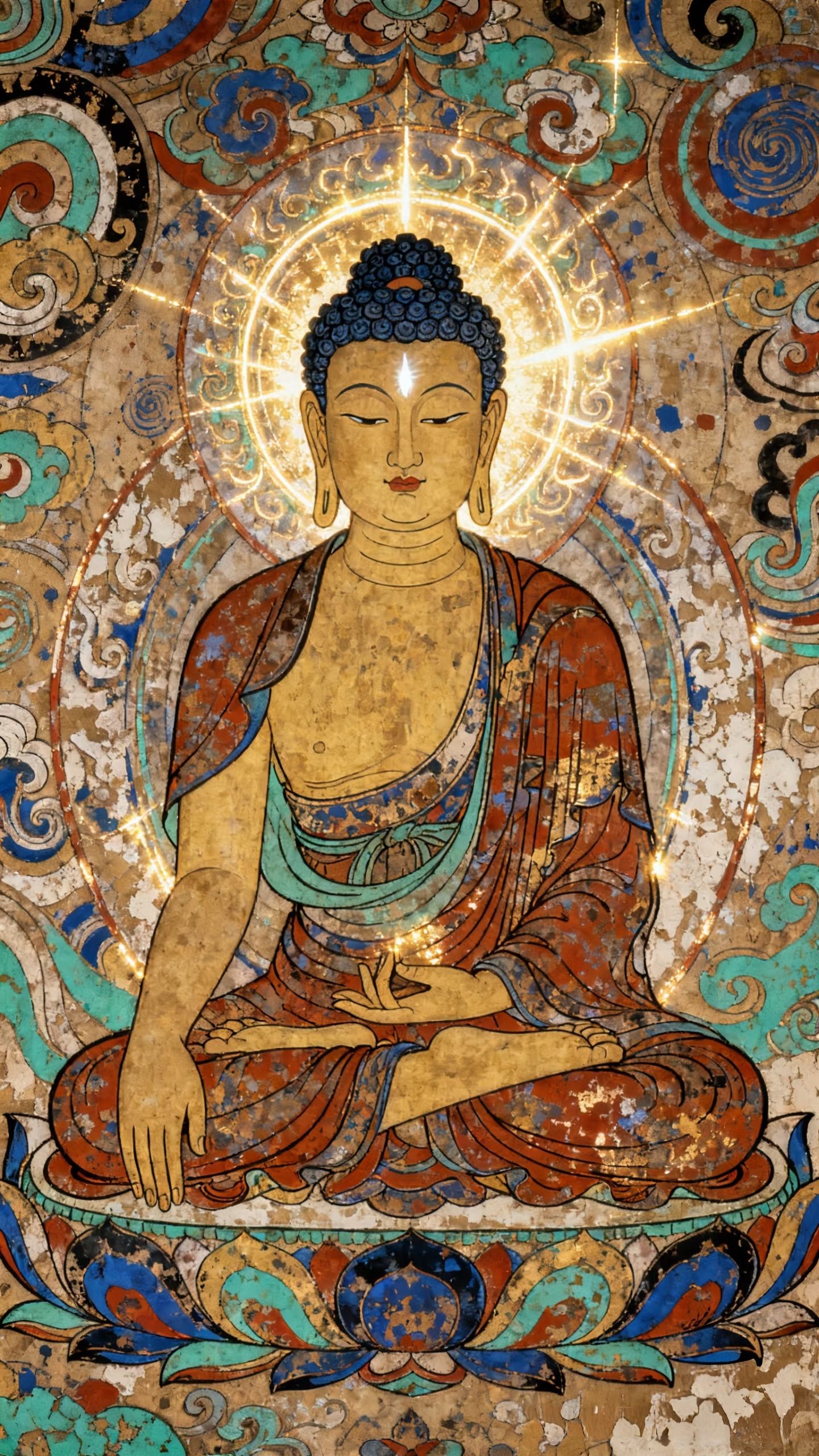
After years of ascetic practice (including fasting to the point of emaciation), Siddhartha realized that extreme self-denial was not the path to enlightenment. He accepted a bowl of milk porridge from a young girl named Sujata, regained his strength, and sat down under a Bodhi tree, vowing not to rise until he attained enlightenment. For seven days and seven nights, he meditated deeply, and during this time, the demon Mara—lord of desire, fear, and ignorance—tried to distract him. Mara sent his armies of demons, his beautiful daughters (to tempt him with pleasure), and even tried to make him doubt his own worth. But Siddhartha remained unshakable. He raised his right hand and touched the ground, calling upon the earth to witness his accumulated merits over countless lifetimes. The earth shook in response, and Mara and his forces fled in defeat. On the seventh night, as the morning star rose, Siddhartha finally attained enlightenment—understanding the true nature of suffering, its cause, its cessation, and the path to liberation (the Four Noble Truths). This moment is known as “the Great Awakening,” and the Buddha’s gesture of touching the ground (the Bhumisparsha Mudra) is a common sight in Tibetan Thangkas and Gau Boxes, symbolizing unwavering faith, courage, and the victory of wisdom over ignorance.

3. The Final Teaching: Compassion Until the End

At the age of 80, Sakyamuni Buddha sensed that his time on earth was coming to an end. He traveled to Kushinagar and lay down between two sal trees, surrounded by his disciples. His final teachings were simple yet profound: “All composite things are impermanent. Strive for your own liberation with diligence.” He reminded his disciples that he would not be physically present forever, but his teachings (the Dharma) would be their guide. As he took his last breath, the sky darkened, flowers rained from the heavens, and all beings wept. This legend symbolizes the Buddha’s endless compassion—even in his final moments, he was guiding his followers. In Tibetan Buddhism, this event (the Parinirvana) is honored with great reverence, and depictions of the Buddha’s Parinirvana in Thangkas serve as a reminder of the impermanence of life and the importance of practicing the Dharma. Our Gau Box Thangkas featuring the Buddha’s Parinirvana are a powerful way to carry this reminder of compassion and diligence with you.


The Meaning & Blessings of Sakyamuni Buddha in Gau Box Thangkas

In Tibetan Buddhism, wearing or供奉 a Sakyamuni Buddha Thangka—especially in a portable Gau Box—is more than just a spiritual practice; it is a way to connect with the Buddha’s wisdom, compassion, and blessings. The Gau Box (a small, decorative locket) is a traditional Tibetan accessory designed to hold sacred objects, including Thangkas, mantras, or relics, allowing believers to carry their faith with them wherever they go. When you wear a Sakyamuni Buddha Gau Box Thangka, it carries deep symbolic meanings and blessings:

1. Protection & Peace

The Buddha is seen as a protector from harm—both physical and spiritual. Wearing his image in a Gau Box is believed to ward off negative energy, fear, and misfortune, creating a shield of positive energy around you. It is a reminder that even in times of chaos, the Buddha’s wisdom and compassion are with you, bringing inner peace and calm. For those living busy, stressful lives (a common reality for many of us), this blessing of peace is invaluable.

2. Wisdom & Clarity

Sakyamuni Buddha is the “Enlightened One,” and his imagery symbolizes wisdom, insight, and clarity of mind. Wearing a Sakyamuni Buddha Gau Box Thangka is believed to help open your heart and mind, allowing you to see the world more clearly, make wiser decisions, and let go of ignorance and confusion. It is a powerful tool for spiritual growth, reminding you to seek truth and understanding in all aspects of life.

3. Compassion & Kindness

The Buddha’s entire life was dedicated to compassion—loving all beings unconditionally and helping them end their suffering. Wearing his image is a reminder to cultivate compassion in your own life: to be kind to yourself, to others, and to all living things. It encourages you to live a life of kindness, generosity, and empathy, aligning your actions with the Buddha’s teachings.

4. Spiritual Connection

For Tibetan Buddhists, the Gau Box Thangka is a sacred link to the Buddha and the Dharma. It allows you to carry a piece of your faith with you, whether you are at home, at work, or traveling. Our Gau Box Thangkas are handcrafted with traditional techniques and natural mineral pigments, ensuring that each piece is not just a piece of jewelry, but a sacred object that honors the Buddha’s legacy and deepens your spiritual connection.


Important Wearing Taboos for Sakyamuni Buddha Gau Box Thangkas

In Tibetan Buddhism, sacred objects like Sakyamuni Buddha Gau Box Thangkas are treated with great reverence. To honor the Buddha and receive his blessings, it is important to follow these wearing taboos—rooted in respect for the Buddha’s teachings and the sacredness of the object. These taboos are not meant to restrict you, but to help you cultivate a respectful attitude toward your faith:
  • Do not wear the Gau Box below your waist: The Buddha’s image is sacred, and wearing it below the waist (e.g., on a belt, in a pocket below the waist) is considered disrespectful. It should be worn around your neck, close to your heart—symbolizing that the Buddha’s wisdom and compassion reside in your heart.
  • Remove it during impure activities: Take off your Gau Box Thangka before bathing, swimming, or engaging in any activity that involves nudity or impure substances (e.g., alcohol, drugs). The Buddha’s image should not be exposed to water or impure environments, as this is a sign of disrespect.
  • Do not place it in impure places: When you are not wearing your Gau Box, store it in a clean, sacred place—such as a shelf above eye level, a prayer altar, or a soft cloth bag. Do not place it on the floor, under a bed, in a bathroom, or near dirty clothes, shoes, or food.
  • Do not lend it to others casually: Your Gau Box Thangka is a personal, sacred object that carries your intentions and blessings. Lending it to others (especially non-believers) can dilute its spiritual energy and is considered disrespectful. If someone asks to see it, you can show it to them gently, but do not let them wear it.
  • Do not treat it as a mere accessory: While our Gau Box Thangkas are beautiful and can be worn as jewelry, they are first and foremost sacred objects. Do not decorate them with non-sacred items (e.g., loud, flashy charms) or wear them in a way that is disrespectful (e.g., throwing it around, wearing it while arguing or being angry).
  • Handle with clean hands: Always touch your Gau Box Thangka with clean hands. If your hands are dirty or greasy, wash them first before adjusting or handling the Gau Box.

Final Thoughts: Carry the Buddha’s Blessings with You

Sakyamuni Buddha is more than a historical figure or a deity in Tibetan Buddhism—he is a symbol of wisdom, compassion, and liberation. His life story, legends, and teachings have inspired millions of people to seek inner peace and live a life of kindness. Wearing a Sakyamuni Buddha Gau Box Thangka is a beautiful way to honor his legacy, connect with your faith, and carry his blessings with you wherever you go.
At our store, we take great pride in crafting authentic, high-quality Sakyamuni Buddha Gau Box Thangkas—using traditional Tibetan techniques, natural mineral pigments, and handcrafted Gau Boxes. Each piece is made with reverence and care, ensuring that it is not just a product, but a sacred companion that will guide and protect you on your spiritual journey.
Whether you are a devout Tibetan Buddhist, a spiritual seeker, or someone who appreciates the beauty and depth of Tibetan culture, a Sakyamuni Buddha Gau Box Thangka is a meaningful addition to your life. Remember to wear it with respect, follow the taboos, and let it remind you of the Buddha’s wisdom and compassion in every moment.

Sort by
Invalid email address