Black Jambhala: Origin, Legends, Meanings & Wearing Taboos | Tibetan Gau Box & Thangka
| Zen Rhymeart
In Tibetan Buddhism, few deities are as revered and beloved as Black Jambhala (Tibetan: Dzam Bha La Nag Po), the fierce yet compassionate God of Wealth. Unlike the gentle imagery of many fortune deities, Black Jambhala’s wrathful appearance hides a heart dedicated to freeing sentient beings from poverty and suffering. For those who honor Tibetan Buddhist traditions, wearing or worshipping Black Jambhala—often depicted on sacred Gau Boxes and Thangkas—isn’t just a symbol of prosperity; it’s a spiritual practice rooted in centuries of culture and faith. Below, we’ll explore the true story of Black Jambhala, his sacred legends, profound meanings, and essential wearing taboos, helping you connect deeply with this powerful deity while respecting his sacredness.
1. Black Jambhala: Background & Origin
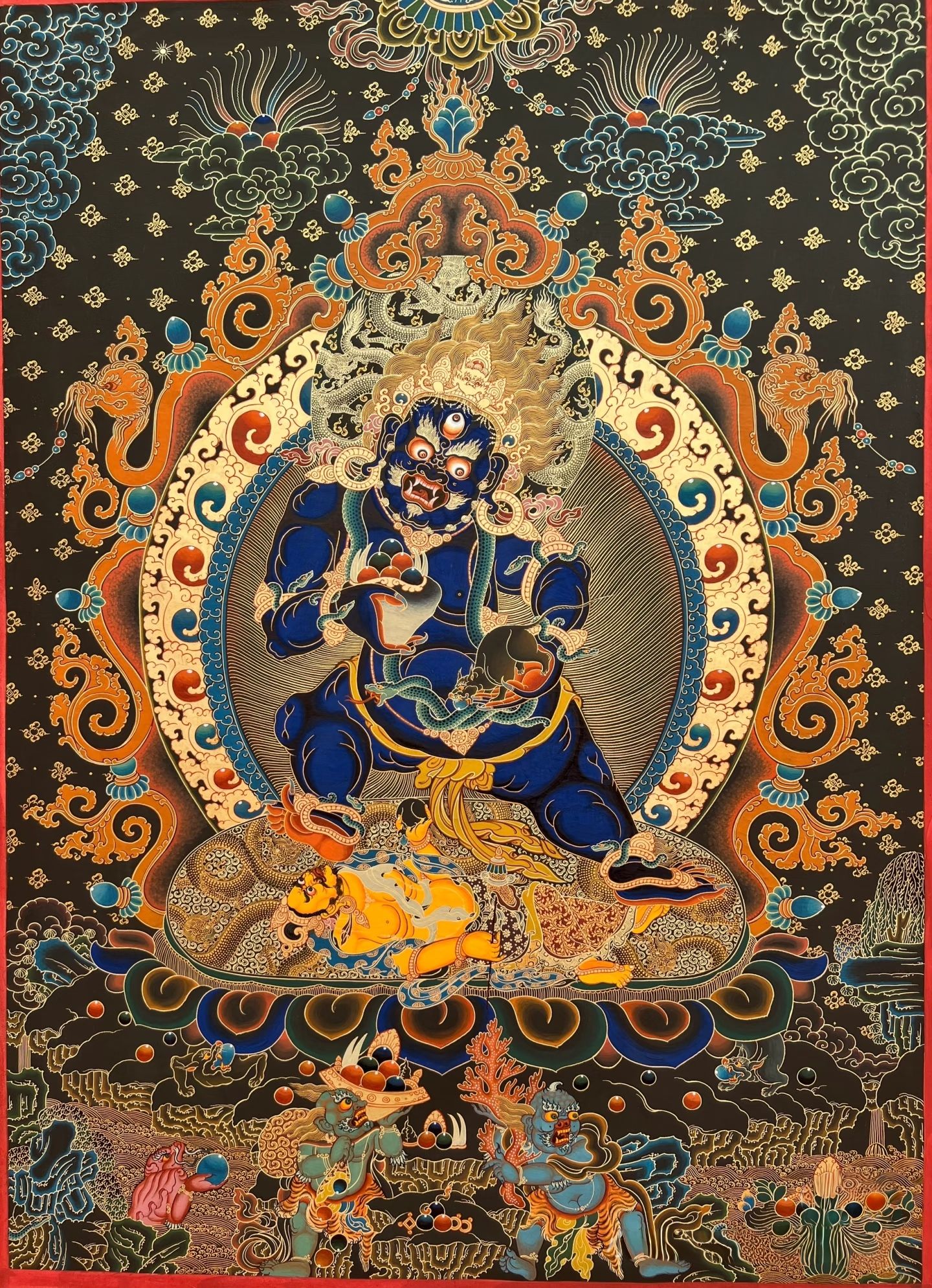
For our independent station’s Gau Boxes and Thangkas, we honor this sacred iconography with traditional craftsmanship—each Black Jambhala depiction is hand-painted or carved by skilled Tibetan artisans, preserving the deity’s sacred essence and ensuring authenticity for your spiritual practice.
2. Sacred Legends of Black Jambhala
Another cherished legend tells of a solitary yogi who lived in poverty, yet remained devoted to the Dharma. Black Jambhala appeared to him in a dream, revealing that his poverty was a result of past-life greed. The deity instructed him to meditate on compassion and practice gratitude, and in return, he would be blessed with enough to sustain himself and help others. The yogi obeyed, and soon after, he found a small treasure hidden in a cave—enough to feed the poor in his village and continue his spiritual practice. This story reminds us that Black Jambhala’s blessings come to those who seek wealth not for themselves, but to serve others and grow spiritually.
3. Meanings & Benefits of Black Jambhala
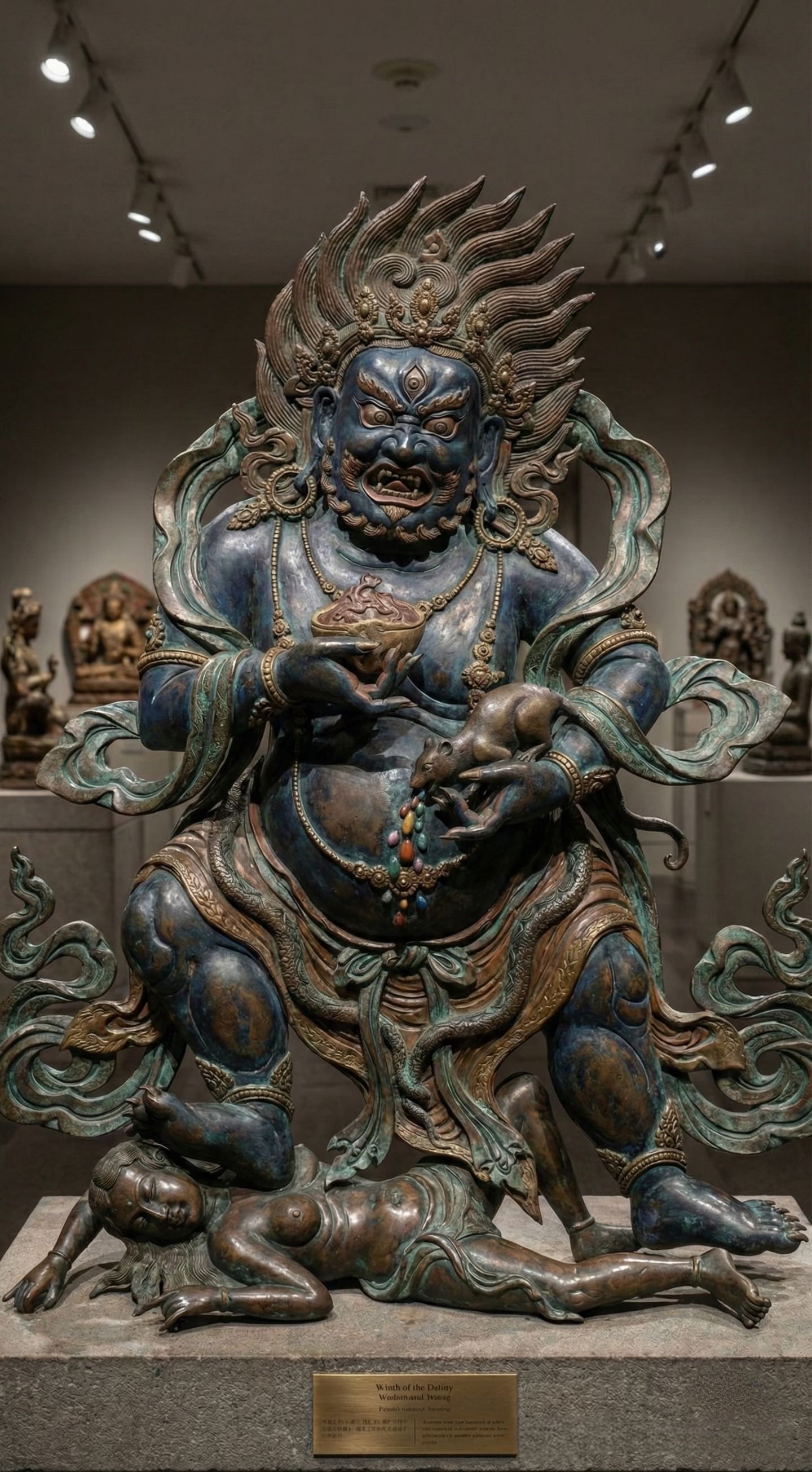
- Material Prosperity: He is widely revered for attracting wealth, abundance, and good fortune—helping devotees overcome financial hardships, pay debts, and build stability. The mongoose in his hand, which spews jewels, symbolizes his ability to shower blessings of material abundance on those who honor him with a pure heart.
- Spiritual Protection: Black Jambhala’s wrathful form is a powerful shield against negative energies, curses, theft, and bad luck. He purifies karmic obstacles, protects against spiritual attacks, and helps devotees overcome inner demons like greed, arrogance, and fear.
- Emotional & Mental Peace: By cutting through ignorance and ego, Black Jambhala helps devotees find inner calm and clarity. He eases anxiety about the future, reduces stress, and fosters a mindset of gratitude—allowing us to find joy in the present moment.
- Karmic Purification: His skullcup symbolizes the transformation of negative emotions and karmic debt into wisdom and compassion. Worshipping Black Jambhala helps purify past mistakes and create a path toward spiritual growth.
4. Essential Wearing & Worship Taboos
- Keep It Pure: Black Jambhala is a sacred deity—never wear your Gau Box or place your Thangka near unclean areas (e.g., bathrooms, garbage bins) or touch it with dirty hands. Before handling your Gau Box or Thangka, wash your hands and calm your mind to show respect.
- Avoid Profane Settings: Do not wear your Gau Box in bars, casinos, or other places associated with greed, violence, or immorality. These environments clash with Black Jambhala’s teachings of compassion and purity, and may block his blessings.
- Do Not Lend or Touch Others: Your Black Jambhala Gau Box is a personal spiritual tool—never lend it to others, as it carries your energy and connection to the deity. Additionally, avoid letting others touch the deity’s image, especially his head or face (the most sacred parts).
- Proper Storage: When not wearing your Gau Box, store it in a clean, dry place—preferably on a high shelf (above eye level) or in a sacred space with other spiritual items. Avoid storing it in direct sunlight,潮湿 (humid) areas, or near electronics. For Thangkas, hang them in a respectful area (not above a bed or in a bathroom) and keep them away from moisture and dust.
- Respectful Attitude: Wear your Gau Box with a pure heart and positive mindset. Avoid anger, resentment, or greed while wearing it—Black Jambhala’s blessings flow to those who practice compassion and gratitude. Do not use the deity’s image as a mere fashion accessory; treat it with the reverence it deserves.
- Gau Box-Specific Taboos: As a portable shrine, Gau Boxes should not be worn directly against the skin (use a chain or cloth to create a barrier) to show respect for the sacred items inside. Do not open your Gau Box unnecessarily, as it contains sacred relics or images that should remain protected.
5. Connect with Black Jambhala Through Our Gau Boxes & Thangkas

